Understanding the Appeal of Canvas Art
The Aesthetic Difference
In Johannesburg, every serious braai host knows the wall behind the table must hold its own. Canvas photo prints change the dynamic. Where a frame declares its borders, a canvas relaxes into the space, its woven surface pulling you closer rather than reflecting you back.
The aesthetic difference is tactile. A canvas print becomes part of the wall’s character, adding a quiet texture that suits our light-filled homes.
There is a simple hierarchy of visual comfort:
– The matte finish forgives fingerprints
– The material blends without needing an ornate frame
– The lighter weight hangs easily, with nothing to break
These details matter. They accumulate into a feeling you get every time you walk past, a warmth that guests notice but cannot name.
Durability and Longevity
Canvas photo prints hold their colour for decades, outliving the digital files on your phone. The cotton-polyester blend resists the warping that plagues cheaper alternatives. Ink bonds with the fabric instead of sitting on top of the surface.
Several factors determine this durability:
- Archival-grade pigment inks resist UV fading
- A sealed coating protects against dust and moisture
- The stretcher bars keep tension evenly across the frame
We print on materials tested for Johannesburg’s dry climate and coastal humidity alike. The surface wipes clean with a soft cloth. No glass to shatter, no frame to tarnish! The canvas photo prints remain taut and stable for years.
That longevity means your memories stay visible, something your phone gallery cannot promise.
Versatility in Design
An interior can change its identity without a single new piece of furniture. Canvas photo prints are the quiet architects of that transformation. Because their texture absorbs light instead of bouncing it, they settle into rooms with the ease of a well-worn jacket.
This adaptability is not accidental. The medium is a hybrid, part fabric, part pigment, part structure. That hybrid nature allows it to speak the visual language of a timber cabin and a concrete loft in the same breath.
- They mirror the room’s language, whether industrial, rustic, or high gloss.
- The absence of glass removes reflective glare, so the artwork survives shifts in lighting direction.
- Their fabric surface harmonises with textiles, bricks, and ceramic tile.
Choosing the Right Image and Style
Selecting High-Resolution Photos
Every photograph carries an energy that either survives the transfer to canvas or fades entirely. The deciding factor is resolution. For canvas photo prints, the source file must contain enough data to endure enlargement. Professional labs hold steady on 300 DPI at final size. Below that, you invite soft edges and visible artifacts.
Subject selection carries equal weight. High contrast portraits and layered landscapes adapt well to textured surfaces. The images that succeed share common traits:
- A primary subject locked in sharp focus
- Shadows that stay clean and noise-free
- Colour saturation that holds against the fabric weave
A flawed family snapshot can hold more soul than a flawless stock photograph. That authenticity shows in the final piece. For canvas photo prints, choose images with personal resonance, and the result will stand out on any wall.
Color Correction and Enhancement
The screen lies. Your monitor’s brightness rarely matches the matte surface of a textured print. When choosing the right image for canvas photo prints, think about the room’s lighting first! A dark image will absorb light, while a bright scene can feel overblown on a sunny South African wall.
Colour correction is about restraint. Labs can boost vibrancy dramatically, but I prefer a subtle approach. The goal is to enhance the original data, not replace it. Consider these points:
- Warm tones suit wooden interiors
- Cool blues balance bright, sunny spaces
- Keep skin tones natural to avoid a plastic sheen
Ultimately, trust the source. A well-exposed file needs minimal intervention. Over-processing destroys the original character. The grain and light already carry the piece.
Matching Your Interior Decor
The most common mistake in home decorating is choosing art that matches the sofa. The best canvas photo prints respond to the room’s purpose and light. A Durban beach house needs an image with quiet movement, perhaps a long exposure of rolling surf. A Pretoria townhouse with dark tile wants something bold, a close crop of a protea.
Your wall is the final layer of architecture. A north-facing wall washes out pale images, while a dim corner swallows dark ones. The subject must match the room’s daily rhythm. Your canvas photo prints should carry that tone, calm in a bedroom, energetic in a dining room.
- Wall proportion matters as much as the photograph itself
- Subjects tied to a room’s regulars carry real meaning
- A busy corner calls for a simpler image
This is curation, not decoration.
Canvas Wrap Options
Over a trillion photographs are taken each year, but few earn a place on a wall. Choosing the right image for your canvas photo prints starts with intent. A frame packed with detail, like a Johannesburg street scene, demands a gallery wrap where the image continues around the edges. A minimalist portrait works better with a mirror wrap, which reflects the surface inward.
From my own studio walls, I can tell you the wrap style alters perception.
- Gallery wrap extends the scene across all sides.
- Mirror wrap creates a clean seam by reversing the border.
- Standard wrap leaves a white border for a matted look.
South African light shifts dramatically between provinces. A Cape Town southeaster throws harsh shadows, so a high-contrast image handles the glare better than a washed-out pastel. Quality prints use colorfast, UV-resistant material, or the memory fades!
The Printing and Production Process
Inkjet vs. Dye-Sublimation
Many people assume all canvas photo prints are made the same way. They are not. The production process splits into two distinct techniques: inkjet and dye sublimation. Inkjet printing deposits pigment droplets directly onto the canvas fibres. Dye sublimation uses heat to turn solid dye into gas, which then bonds with the polymer coating on the canvas. Each method yields a distinct surface. Inkjet prints offer sharp edges and rich texture. Dye sublimation gives a continuous tone, almost photographic. For canvas photo prints, the choice affects how colours sit under gallery lighting. Consider the differences:
- Inkjet handles fine detail better.
- Dye sublimation resists scratches and water damage.
- Inkjet works on uncoated canvas.
- Dye sublimation requires a synthetic blend.
For most canvas photo prints, your intended display space should guide the decision. A bright coastal room may favour dye sublimation’s resilience.
Material Quality and Texture
Most people never inspect the backs of their canvas photo prints, yet that hidden surface reveals everything about their quality! The production process begins with substrate choice. Cotton duck, a tightly woven fabric, holds ink with precision. Polyester blends offer dimensional stability instead.
The weave texture alters how light scatters across the final image:
- Fine grain suits portraits, where skin tones demand subtlety.
- Coarse weave introduces a painterly quality to landscapes.
In my experience, stretching tension matters as much as the fabric. Professionally stretched canvas photo prints maintain uniform tension across their frames, keeping the surface flat against the stretcher bars.
The primer layer, applied before printing, governs ink absorption. Water-based primers and solvent-based primers produce different saturation levels. This single choice changes how the finished surface behaves under gallery lighting.
Gallery Wrapping Techniques
The printing press does not care about your emotional attachment to that holiday photograph. Canvas photo prints demand a disciplined production environment where humidity stays near 50 percent and inkjet heads align within a fraction of a millimetre. Ink lands in controlled layers, with colour profiles dictating how much pigment reaches the cotton duck. Too much ink warps the canvas. Too little leaves the image looking washed out, which is how most phone snapshots end up on walls anyway.
Gallery wrapping techniques come into play once the ink settles. This is where production houses reveal their actual standards. A proper gallery wrap stretches the canvas around a wooden frame and secures it on the rear face, leaving the edges uninterrupted. The corner folds demand precision. A sloppy fold produces a bulge that catches light and draws attention away from the subject, defeating the purpose of a premium product. The frame depth also factors into the decision, with deeper profiles creating a shadow line that adds perceived value to the finished piece.
Three things separate crisp gallery wrapping from a weekend craft project:
- Corner pleats must fold in sequence to create a flat diagonal seam
- Staples must sit flush against the frame to avoid warping
- Frame corners need to be square before tension is applied
For canvas photo prints ordered online, tension during gallery wrapping dictates how the surface behaves in your home. A properly stretched canvas offers slight resistance when pressed. The staple pattern on the back reveals the workflow directly. Random spacing suggests haste, consistent intervals indicate a workshop that respects the material. South African buyers often inspect only the front, but the back of professionally produced canvas photo prints exposes the real production discipline.
Handling and Finishing Touches
The end of the printing line is where workshops reveal their discipline. Freshly printed canvas photo prints are fragile objects with an opinion on everything. Fingerprints, dust, and a clumsy thumb undo all that calibrated work. Professional handlers wear cotton gloves because skin oil degrades the surface over time.
Finishing touches go beyond the frame. Hanging hardware matters. A South African wall with load bearing brick needs raw plugs and screws. A cheap sawtooth hanger will not survive humidity shifts!
- Inspect edges under raking light for missed spots
- Check the backing paper for a clean dust seal
- Verify the hanging wire tension with a firm pull
Packaging is the final act. Bubble wrap protects the corners, but only if the box fits snugly. A loose box lets the canvas photo prints shift during courier transit.
Quality Control Measures
A single shifted nozzle can silently ruin an entire run of canvas photo prints. That is why quality control at the printing stage is a sequence of measurements. Every batch passes through a spectrophotometer to verify colour density against the original proof. If the delta value drifts, the operator stops the press immediately. One unnoticed shift in ink pressure contaminates every subsequent print.
- Verify colour profiles before each job
- Measure ink density every twenty prints
- Inspect the canvas surface under raking light
The process demands rigorous attention. Operators compare each print against a signed reference under controlled lighting, not a monitor. They check for banding, micro bubbles, and ghosting. A flaw in the substrate appears only after the coating cures. That is why curing time is built into the schedule. Rushing it creates brittle prints that fail later. For canvas photo prints, the invisible defects are the ones that cost you.
Creative Display Ideas for Your Home
Creating a Gallery Wall
Arranging a gallery wall is an act of rhythm. The eye moves across your wall, pausing where the images offer contrast. When you place canvas photo prints of different sizes, you create a visual cadence that invites closer inspection.
Consider the space between pieces. Consistent gaps of 5 to 7 centimetres keep the arrangement unified without feeling sterile. For a more organic feel, I often follow a simple sequence:
- The largest print anchors the arrangement.
- Bold colours balance against neutral tones.
- Stepping back reveals the overall weight.
The result is a display that feels curated, not cluttered. Your wall becomes a record of moments, and guests will pause to study it. Texture draws viewers into the memory itself.
Sizing and Placement Tips
Canvas photo prints possess presence. One oversized piece can change a passage’s mood. I know this because I replaced a dull framed poster with a vivid print, and the transformation came from scale alone! Any room offers clues for sizing. The distance from floor to ceiling, the width of the nearest furniture, and the amount of natural light all inform the choice.
Placement respects traffic flow. A print hung too low invites collisions; too high creates a floating effect. For multiple pieces, I treat the wall as a grid. Odd numbers work best.
- Sizes scale with the wall, not the room.
- The eye level line sits at roughly 150 centimetres.
- Corner spaces suit smaller formats that lean against the wall.
The largest anchor in any composition keeps the arrangement stable.
Incorporating Lighting Effects
A single 30 watt spot light adds forty percent more perceived depth to canvas photo prints, yet most homes leave their walls in shadow. I once saw a glorious Table Mountain print reduced to a grey smudge by a rogue ceiling fan light. The artwork was fine. The lighting was criminal. In South African homes, where afternoon sun streams through wide windows, the difference between a flat image and a vivid one often comes down to placement of the lamp, not the print.
Light from a 30 degree angle reduces glare and carves texture into the surface. Warm bulbs at 2700K flatter skin tones in portraits, while cool bulbs at 4000K sharpen landscape details. A dimmable system gives you control without repainting the wall.
- Picture lights clip directly onto the frame
- Recessed downlights create a pool of attention
- Track lighting allows you to shift focus between pieces
Natural light shifts hourly, so canvas photo prints change personality from breakfast to sunset. Morning rays bring out warm pigments. Harsh midday light washes them out. The same piece can look entirely different, which is the point.
Mixing with Other Art Forms
Pairing canvas photo prints with woven tapestries or ceramic vessels balances flat surfaces against three dimensional forms. A tableau of family photographs can share a mantel with carved wooden masks, or a large print can sit above a console table layered with sculptural objects. The contrast makes each piece more noticeable.
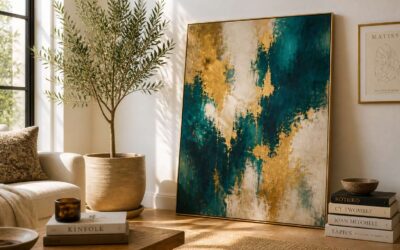
Consider leaning a framed canvas against a bookshelf instead of hanging it. The casual posture invites touch, and it plays well against the spines and objects around it. In a Cape Town cottage I visited, a seascape canvas photo print rested on a sideboard beside a vintage typewriter and a potted succulent. The arrangement felt intentional, assembled over years.
- Mix textiles: hang a woven wall hanging beside a canvas print.
- Layer surfaces: place small sculptures or vases in front of the print.
- Use unexpected mounts: prop prints on shelves, mantels, or window sills.
These combinations let your canvas photo prints breathe within a room, not dominate it.
Seasonal Refresh Concepts
In Cape Town’s autumn, the quality of afternoon light changes almost weekly. I find myself rotating my canvas photo prints to match the mood: bright coastal images facing the morning sun, muted landscapes pulled out for the grey months. This seasonal chore becomes a curation practice.
Refresh concepts do not require new purchases. A spring rearrangement might turn a landscape orientation to portrait, or move a print from the bedroom to the dining nook. The physical act of shifting a canvas photo print, cleaning its surface, and finding a new spot for it, changes how the whole room reads. In winter, I cluster three smaller pieces on one wall to counter an empty corner. Come summer, they disperse into different rooms entirely.
Personalized Gift Ideas
Canvas photo prints carry memory without demanding attention. They can rest on a sideboard, lean against a window ledge, or stand on the floor. This flexibility makes them a thoughtful gift. The recipient decides how the image enters their daily space. One person might keep a canvas of a beach near a reading chair. Another might place the same print on a dresser, half hidden behind a hat box.
Personalised canvas photo prints take this further. A canvas printed with a favourite view or a record sleeve becomes a private artefact. It settles into gaps and corners, changing the feel of a room without changing the layout.
Some homes display them in unexpected ways:
- A small canvas tucked between two stacked books, leaning outward.
- A trio of canvases on a mantelpiece, each at a different height.
- A single large canvas resting on a dresser, facing the door.
These arrangements turn a gift into a living part of the house. The image is fixed, but its position is not. That is the quiet joy of giving canvas photo prints.
Maintenance and Care Tips
Cleaning Guidelines
Canvas photo prints have a textured surface that gathers airborne particles. Over time, dust dulls colours and obscures fine detail. Weekly dusting with a soft, dry microfiber cloth preserves the visual depth. Water and cleaning sprays undermine the stretched fabric, since moisture seeps into the weave and causes warping. Gentle strokes along the texture direction protect the pigment layer.
The hanging location influences how much care the artwork needs. Kitchens and bathrooms expose canvas photo prints to humidity and airborne grease. These conditions attract residue that dry dusting cannot lift. A barely damp cloth with zero additives handles stubborn marks, but only with light pressure. Heavy rubbing disturbs the surface.
Certain materials cause damage:
- Polishing sprays
- Vinegar solutions
- Paper towels
These leave streaks or fibres that cling to the canvas texture. Secure hanging hardware matters too, since loose fixtures allow the frame to shift and rub against the wall.
Protecting from Sunlight
Sunlight damages canvas photo prints over time. South African rooms flood with high UV light, particularly in summer. That afternoon glow streaming through a window accelerates pigment breakdown. Colours shift imperceptibly at first, then yellow and fade beyond recovery. The damage compounds over years, and no cleaning routine can reverse it.
Manage the light path before hanging:
– North facing rooms receive sustained exposure
– East facing rooms get sharp morning sun, so position artwork on shaded walls
– Use sheer curtains or UV blocking film to diffuse harsh light
Consider how light moves through each space. A simple assessment of daily patterns can add decades to the life of your canvas photo prints.
Storage and Transport Advice
A single sideways lean can ruin a corner, and in South Africa’s summer heat, that ruin happens fast. Proper storage for canvas photo prints starts with a flat, dry surface. Keep your canvas photo prints upright only if they are framed and padded. Never stack them face to face. Air needs to move between each piece. Use acid-free tissue as a barrier, then wrap in kraft paper.
For transport, the passenger footwell is safer than the boot. The floor absorbs less shock. Secure the canvas with a seatbelt, but let the fabric face you. Cargo areas in cars can hit 60 degrees Celsius on a Highveld afternoon. That kind of heat softens the ink layers and makes the canvas bend out of shape.
When to Consider Re-printing
In South Africa, climate works on a canvas in ways most owners miss. Coastal humidity seeps into the weave of canvas photo prints, while the Highveld’s dry air makes the substrate brittle over years. Inspection should be seasonal, not incidental. Run your palm across the surface to feel for slack. A canvas that has lost its tautness needs attention!
For most collectors, a monthly ritual suffices:
- Run a fingertip across the surface for tension changes.
- Look for lifting along the frame edges.
- Inspect the backing for any stained areas.
Re-printing becomes necessary when the image’s integrity fails, not when it simply shows age. If the pigment has shifted, or a persistent bloom has formed on the surface, the original purpose is lost. I have seen canvas photo prints last decades, but the moment the image fades past the point of recognition, a fresh printing is warranted.


0 Comments